
Why You Should Never Skip a Tire Rotation
The cornering and rolling forces on each of your tires are different. If you have a front wheel drive car, the power and most of the force is transmitted to the front tires while the rear tires pretty much just follow along like fixed wagon wheels. A rear-wheel drive car or truck sends power to the back while steering forces are handled by the front wheels. All-wheel drive and 4wd have their unique power, steering and cornering characteristics as well.
The point is, your front left tire is going to wear differently than your right rear tire, or for that matter, any of the other tires vary at each corner of the vehicle because of the force and friction.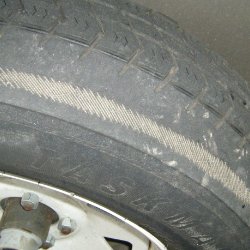
The solution to this problem is tire rotation. Tire rotation involves removing your wheels and tires from ...[more]
Cool Summer Car Gadgets and Gizmos
The automotive aftermarket offers thousands of cool gadgets and gizmos to make your summer driving experience safer, more comfortable and way more entertaining. Here are the top ten coolest of the cool gadgets for 2017:
1. Dash-cam - It seems like there are cameras everywhere today, and there is no better place to put one than on your dash. If something exciting or dangerous happens while you are driving, the dash cam will catch all the action. You can use this as evidence in case of a crash, traffic stop or a crime, or simply catch an unexpected bit of crazy video and become a social media sensation. Dash cam kits are generally easy to install, with suction cups that simply mount on the windshield and a USB or 12v power port plug for power.
2. Electronic Parking Guide - Wire up the Precision Parking Park-Zone system and get audible warnings before you hit an obstacle or another car. Great for parallel par ...[more]
The Incredible Evolution of Tires
With all the tires you encounter every day, it is easy to forget their humble beginning and just how far they have come since the early days of automotive development. Follow along as we recap the incredible evolution that has taken us from simple rubber rings to the products we see today.
The tire had rather humble beginnings. In the late 1800's the invention of the automobile necessitated something for them to roll on. Until then, wheels were rolling around on hard wooden rims or metal bands. In 1888 Carl Benz, one of the famous fathers of Mercedes Benz, invented a new type of tire to match his new type of conveyance, the automobile. It was a metal framed tire, covered with rubber and filled with air. This was the birth of the pneumatic or air filled tire and it revolutionized the world.
Carl Benz' tire had air but it didn't have any tread. It wasn't until 1905 that tread was added to the tire's surface to help it handle the wet, muddy ...[more]
What's Leaking From My Car?
What Happened to My Fuel Economy?
You notice that suddenly your vehicle seems to be getting worse gas mileage than it did awhile back. Why? What happened?
Like with most things on your vehicle, there can be numerous problems at the root of poor fuel economy. Let’s start with the simple ones and work our way to the more complicated issues:
Tires: This one’s easy. Underinflated tires mean more rolling resistance (think about riding a bike with a low tire), and more rolling resistance means poorer fuel economy. Check your tire inflation at least once a month, while the tires are cold, using a good quality tire gauge. Even a pound or two of underinflation can be enough to cause problems!
Air filter: The air filter is made of pleated paper or fabric elements which prevent pollen, dust and particulates from entering the fuel system where they could do some real damage and cause wear. A clogged air filter can literally smother the engin ...[more]
Make Those Tires Last!
Your tires are a big investment, and while it’s easy to just take them for granted, you want them to last through their entire warranty phase (at least). Here are some tips on how to get the most life out of a set of tires:
Tire rotations: No vehicle has 50/50 weight distribution from front to rear, and front tires see a different set of stresses from braking and cornering. Rotating your tires at a 5,000-mile interval ensures even wear and good drivability and handling.
Proper inflation: Underinflated tires are bad news! They’ll wear unevenly due to their altered footprint, they’ll cost you money in terms of higher rolling resistance and poor fuel economy, and the stress from overheating can lead to premature tire failure. Check your inflation levels at least once a month, using a good quality tire gauge.
Wheel alignment: Think about someone who walks with one foot skewed out to the side. That shoe will wear ...[more]
How To Maintain A New Car
So you got a new set of wheels – congratulations! You’re going to want to hang onto it as long as possible, so you’ll want to keep it maintained as well as you can. Here are some suggestions:
First, read the owner’s manual carefully and stick to manufacturer’s recommendations for service intervals. There are certain things that are critical enough that failure to adhere to recommendations can void a new car warranty. Don’t let that happen!
For instance, just about every manufacturer recommends synthetic oil for their engines; it provides better protection in just about every respect, and it’s more stable at high and low temperatures. If your owner’s manual prescribes a 10,000-mile oil change, stick with that and be sure to use the brand and grade of motor oil called for in the manual.
Apply a good coat of wax to your vehicle, and another one on top of that. A properly waxed vehicle does more than jus ...[more]
Spark Plugs – How Often Should They Be Replaced?
In the old days, a tune-up was necessary about every 35,000 miles. It would usually consist of setting the ignition timing, replacing the mechanical breaker points in the ignition, cleaning and adjusting the carburetor and replacing the plug wires and spark plugs. Today, of course, the carburetor’s job is done by fuel injection and the ignition timing and spark are controlled by the engine computer. Few vehicles still have plug wires anymore either, as the distributor was replaced by the computer and a coil-on-plug design which delivers a spark at each spark plug.
But what about the spark plugs themselves, though? How often do they need to be replaced now?
Manufacturers tout an 80k-100k mile service interval on spark plugs now, thanks in part to improvements in plug design and materials. That might be stretching it, however. Remember that if you have a 100,000-mile spark plug, its ele ...[more]
Reasons Why Tire Inflation Is So Important
Even just a pound or two of underinflation in your tires can be a problem. Why, though? There are several reasons.
Fuel economy: If you ever rode a bicycle with a low tire, you know that it feels like you’re riding through wet cement due to the added rolling resistance. The same thing is happening with your car, and compromising your fuel economy. Over the course of 10,000 miles per year, that can add up to 150 gallons of gas or $500 out of your pocket!
Handling: Low tire pressure means poorer control and longer stopping distances. At high speeds, in particular, this can be downright hazardous.
Premature tire wear: Underinflated tires are under a lot of stress, especially their steel belts. Take a paper clip and work it back and forth until it snaps. Feel how hot it gets when the metal is stressed? The same thing happens with the steel belts in your tir ...[more]
What Tires Are Right For Your Truck?
So you’re in need of a set of tires for your truck? No problem! The question is, though, what kind of tires are going to be best?
First, you’ll need to think about what you use that truck for. Will you regularly be hauling heavy loads or pulling a trailer? Do you expect to keep it on the pavement for the most part, or will you occasionally go off-road? If you go off-road, will it be on soft dirt or will you be plowing through brush, mud, and rocks? And finally…what’s your budget?
If you’re wanting to keep it on the pavement most of the time and your truck is a daily driver for errands, school, soccer, and grocery runs, all-season tires are probably the right choice. All-season light truck tires can rival the best passenger tires when it comes to noise level, handling, ride quality and road manners while offering good, reliable traction on wet or dry pavement.
All-terrain tires feature a more aggressive tread pat ...[more]
| << Previous | 123 | Next >> |
Archives
Tags
