
What You Need to Know Before Buying New Tires
Be Aware of Your Spare
Tire Maintenance for Beginners
Give Your Family the Gift of Safety - New Tires
We are the land of the man (or woman) who has everything. We have electric dog nail trimmers, vacuums that work without your help and phones with more computing power than a fleet of space shuttles. With all this great and not so great stuff, it's getting harder and harder to give a great gift. Before you go flailing around for a gift nobody wants or needs just to say you have something to wrap, consider the gift of safety; a new set of tires for a friend or family member.
Maybe you think this gift won't be appreciated. After all, tires don't have the appeal of a diamond pendant or a 6-way adjustable cyclo-massage equipped lounger. 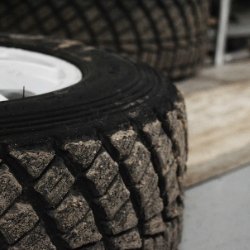 Actually, though, a new set of tires is so much more.
- Your tires are the only part of your car that touches th ...[more]
Storing and Caring for Your Seasonal Wheels and Tires
In many parts of the US and Canada, it is common to have two sets of wheels and tires to tackle seasonal differences in driving conditions. You know what to do with them while they are on your car, but what is the proper way to store the ones you put up for the season? Here are some tips to ensure your seasonal tires are ready to go when it is time to swap them out.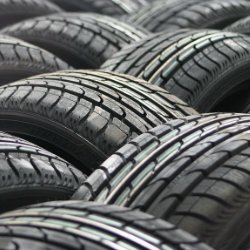
1. Clean Your Wheels - Contaminants and road grime can degrade the finish on your wheels while they are in storage. Before you put them away, clean your wheels with some mild detergent. Rinse them off and make sure they are completely dry before you put them away for the season.
2. Clean and Treat Your Tires - Tires are made of natural and synthetic rubbers and ...[more]
The Incredible Evolution of Tires
With all the tires you encounter every day, it is easy to forget their humble beginning and just how far they have come since the early days of automotive development. Follow along as we recap the incredible evolution that has taken us from simple rubber rings to the products we see today.
The tire had rather humble beginnings. In the late 1800's the invention of the automobile necessitated something for them to roll on. Until then, wheels were rolling around on hard wooden rims or metal bands. In 1888 Carl Benz, one of the famous fathers of Mercedes Benz, invented a new type of tire to match his new type of conveyance, the automobile. It was a metal framed tire, covered with rubber and filled with air. This was the birth of the pneumatic or air filled tire and it revolutionized the world.
Carl Benz' tire had air but it didn't have any tread. It wasn't until 1905 that tread was added to the tire's surface to help it handle the wet, muddy ...[more]
Make Those Tires Last!
Your tires are a big investment, and while it’s easy to just take them for granted, you want them to last through their entire warranty phase (at least). Here are some tips on how to get the most life out of a set of tires:
Tire rotations: No vehicle has 50/50 weight distribution from front to rear, and front tires see a different set of stresses from braking and cornering. Rotating your tires at a 5,000-mile interval ensures even wear and good drivability and handling.
Proper inflation: Underinflated tires are bad news! They’ll wear unevenly due to their altered footprint, they’ll cost you money in terms of higher rolling resistance and poor fuel economy, and the stress from overheating can lead to premature tire failure. Check your inflation levels at least once a month, using a good quality tire gauge.
Wheel alignment: Think about someone who walks with one foot skewed out to the side. That shoe will wear ...[more]
Reasons Why Tire Inflation Is So Important
Even just a pound or two of underinflation in your tires can be a problem. Why, though? There are several reasons.
Fuel economy: If you ever rode a bicycle with a low tire, you know that it feels like you’re riding through wet cement due to the added rolling resistance. The same thing is happening with your car, and compromising your fuel economy. Over the course of 10,000 miles per year, that can add up to 150 gallons of gas or $500 out of your pocket!
Handling: Low tire pressure means poorer control and longer stopping distances. At high speeds, in particular, this can be downright hazardous.
Premature tire wear: Underinflated tires are under a lot of stress, especially their steel belts. Take a paper clip and work it back and forth until it snaps. Feel how hot it gets when the metal is stressed? The same thing happens with the steel belts in your tir ...[more]
Can I Buy Just Two Tires?
We know that a lot of drivers are working pretty hard to make a dollar go farther and that the outlay for a full set of four tires – even inexpensive tires – can be considerable. That’s why we run across drivers pretty often who ask if it’s okay to just replace a pair of tires, then buy the other pair when they can afford them.
The answer is…yes, but…
You’ll really need to pay attention to the size of the set of tires that you’ve already got and go with that exact same size of tires for your new pair. Having mismatched sizes of tires on your vehicle can result in squirrelly and unpredictable handling and ride quality. If your existing tires are all-season, go with all-season tires. If they’re winter tires, go with winter tires. Ideally, you should even have the same tread pattern and design on the new tires.
Also, the new tires will need to go on the rear, and you can then take the tires ...[more]
Which Type of Tire Tread Do You Need?
| 1234 | Next >> |
Archives
Tags
