
Holiday Travel Tips
Few things typify the holidays like hitting the road to share the magic of the season with family and friends. But with the road choked with other drivers, winter weather hazards, and long empty stretches of sleepy asphalt, a holiday road trip can quickly turn ugly.
Keep the joy meter pegged by taking a few precautions to prepare for your trip.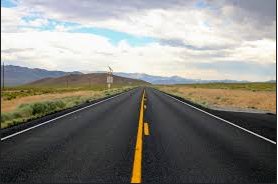
1. Get Your Pre-drive ZZZZZs - Drowsy driving is a largely unheralded hazard, taking a back seat to more socially active no-no's like texting and drinking while driving. A sleepy driver is a gigantic hazard to themselves, passengers and everyone on the road. Make sure you are well rested for the drive and you will find the trip much safer and more enjoyable.
2. Secure the ...[more]
Why You Should Never Skip a Tire Rotation
The cornering and rolling forces on each of your tires are different. If you have a front wheel drive car, the power and most of the force is transmitted to the front tires while the rear tires pretty much just follow along like fixed wagon wheels. A rear-wheel drive car or truck sends power to the back while steering forces are handled by the front wheels. All-wheel drive and 4wd have their unique power, steering and cornering characteristics as well.
The point is, your front left tire is going to wear differently than your right rear tire, or for that matter, any of the other tires vary at each corner of the vehicle because of the force and friction.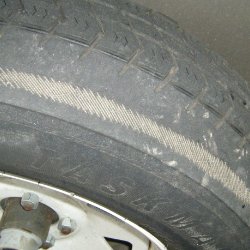
The solution to this problem is tire rotation. Tire rotation involves removing your wheels and tires from ...[more]
Five Things You Didn’t Know About Tires
1. For performance and handling, the trend has long been toward fatter tires with a bigger footprint. That’s starting to change, though. Skinnier tires mean lower rolling resistance and better fuel economy, as well as a smaller aerodynamic profile. While fatter tires do handle better, tire engineers are making up the difference by designing skinny tires with a stickier tread formulation for traction and cornering ability.
2. Static electricity used to be a real concern for vehicles; if you’re old enough, you may remember seeing station wagons with a “ground strap” dragging along the pavement. It’s become a concern again, with newer tread compounds cutting back on the amount of carbon black in newer tires. The solution? Many tires are now designed with an “antenna strip” of more conductive material down the center of the tread, providing a positive electrical contact between tire and pavement.
3. Like with cars, tire ...[more]
Can I Buy Just Two Tires?
We know that a lot of drivers are working pretty hard to make a dollar go farther and that the outlay for a full set of four tires – even inexpensive tires – can be considerable. That’s why we run across drivers pretty often who ask if it’s okay to just replace a pair of tires, then buy the other pair when they can afford them.
The answer is…yes, but…
You’ll really need to pay attention to the size of the set of tires that you’ve already got and go with that exact same size of tires for your new pair. Having mismatched sizes of tires on your vehicle can result in squirrelly and unpredictable handling and ride quality. If your existing tires are all-season, go with all-season tires. If they’re winter tires, go with winter tires. Ideally, you should even have the same tread pattern and design on the new tires.
Also, the new tires will need to go on the rear, and you can then take the tires ...[more]
Which Type of Tire Tread Do You Need?
4 Things About Tires You May Not Have Known
Tires all look sort of the same…round and black…and people tend to think tires don’t change much over the years. That’s really not true, though – engineers and designers are constantly working on advances in tire designs for more miles, better fuel economy and better performance.
Here’s a rundown of current trends in tire technology you may not have been aware of:
- Tall, skinny tires are coming back. If you’ve ever ridden a beach cruiser bike vs. a racing bike, you know that skinny tires have lower rolling resistance. Carmakers are going in that direction, too – the BMW i3 electric/plug-in hybrid uses Bridgestone Ecopia tires, with higher inflation pressure and a taller, skinnier profile. Tall, skinny tires also reduce the car’s frontal profile for lowered wind resistance and aerodynamic drag. It isn’t just the BMW i3, either&helli ...[more]
Mixing Tires – Bad Idea
In a perfect world, all four tires would wear out at the same time. In the same perfect world, everyone would be able to afford a whole set of tires all at once. Unfortunately, things often just do not work out that way.

Sometimes you may just have to replace tires as you can afford them, one or two at a time, but there are some important things to bear in mind if you have to do that.
If you can only afford to replace one or two tires, it’s essential that you go with tires that are identical (or at least as close as possible) to the car’s remaining tires. That means that internal construction, size, tread pattern and design s ...[more]
Winter Tires – Yea or Nay?
Archives
Tags
