Tire Maintenance for Beginners

January 12th, 2018
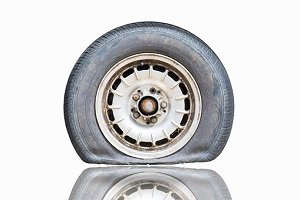
How much do you remember about tire maintenance from your driver’s education class? I bet you don’t remember much. Most courses cover the rules of the road, not how to maintain a vehicle. As a new driver, there are many things to learn. Taking care of your car is one of those things. Let’s start with the one part of your vehicle that touches the road, your tires.Flat Tires & Maintenance
 
That’s right, your tires are the only part of your vehicle that actually touch the road. That makes them an important safety feature, a factor in fuel economy, and a crucial part of your vehicle’s maintenance.  I want to make sure that you can take care of your tires and make them last! 
 
Know how to check your tire pressure! Low tire pressure is the leading cause ...[more]
  Posted in: Tires 101

Which Type of Tire Tread Do You Need?

January 25th, 2017
There are so many tire designs on the road -- all-season, high performance, touring, light truck -- and even within a specific tire design, there may be several choices of tread patterns. What differentiates them, and what are the pros and cons of each tread design? 
 
-- Directional tread has a pattern of grooves and chevron shapes, all pointed in one direction. This design makes it easy to direct water away from the tire's contact patch and prevent hydroplaning in wet weather, and also offers low noise and great road manners. The directional design means tires can only be rotated front-to-rear and not side-to-side or diagonally. 
 
-- Symmetrical tread patterns feature grooves or herringbone designs that are extremely uniform across the tire's tread face. Symmetrical designs are popular for touring tires due to their quiet ride, long wear and ease of r ...[more]
  Posted in: Tires 101

Flat Spots? Let’s Clear Up Some Myths About That…

January 12th, 2017

So your vehicle’s been sitting for a while…you get in it, start the engine and pull out of the driveway when you notice a hard, rough (but very regular) vibration that only gets worse with speed. It doesn’t feel like it’s coming from the driveline or suspension – so what is it?


It could be that the tires have developed flat spots.

With the weight of the vehicle pressing down on the tires for long periods, a section of the rubber and belts can become softer (or harder) than the rest of the tire. This can be exacerbated by cold weather, or just by parking on a cold concrete floor.

Low-profile tires with short sidewalls can be more prone to flat-spotting, as can tires with an H or higher speed rating. In most cases, you can just grit your teeth and drive and the flat spots will work their way out of the tires…but not always. In some severe cases, the flat-spotting is permanent.

So, wh ...[more]

  Tags: tires, tire
  Posted in: Tires 101

No Spare Tire?

September 29th, 2016
Believe it or not, many new vehicles come without a spare tire. Manufacturers have a few different reasons for that, including weight savings, space efficiency, and cost. When you're stuck by the side of the road, though, none of that really matters much, does it? 
 
Instead, these vehicles come equipped with an inflation kit and/or a can of sealant. 
 
Sealant is a gooey substance in an aerosol can that's designed to coat the inside of the tire due to centrifugal force once you get rolling again, hopefully sealing the puncture. These products, such as Fix-A-Flat, have been on the market for decades and tend to work pretty well on a minor puncture. They're not a permanent fix, however. Your speed should be limited after using Fix-A-Flat type products, and you should see about getting the tire repaired or replaced as soon as possible. In addition, most of these products freeze at temperat ...[more]
  Posted in: Tires 101

Which Type of Tire Tread Do You Need?

August 25th, 2016
There are so many tire designs on the road -- all-season, high performance, touring, light truck -- and even within a specific tire design, there may be several choices of tread patterns. What differentiates them, and what are the pros and cons of each tread design? 
 
-- Directional tread has a pattern of grooves and chevron shapes, all pointed in one direction. This design makes it easy to direct water away from the tire's contact patch and prevent hydroplaning in wet weather, and also offers low noise and great road manners. The directional design means tires can only be rotated front-to-rear and not side-to-side or diagonally. 
 
-- Symmetrical tread patterns feature grooves or herringbone designs that are extremely uniform across the tire's tread face. Symmetrical designs are popular for touring tires due to their quiet ride, long wear and ease of rotation, making them a very ...[more]
  Posted in: Tires 101

A Brief History of the Tire

July 28th, 2016
The tire is such a commonplace item -- it's on every car, every truck, every bicycle, every aircraft. It's easy to not give the tire a second thought, but like every other technology, the tire has an interesting history of advances and failures. 
 
In the 19th century, carriages and wagons used steel strips for "tires" on their wheels, with the punishing sort of ride that you'd expect. In later years, they were shod with strips of natural rubber, which was an improvement but was still problematic. Solid rubber still rode pretty rough, and the natural, uncured rubber would get gummy in hot weather and shrink and harden in cold temperatures. Charles Goodyear was able to help with the invention of vulcanized rubber, but the modern tire was still several years off. 
 
By the 1880s, the bicycle was becoming much more popular, and in 1888 Sc ...[more]
  Tags: tires, tire, tire technology
  Posted in: Tires 101

4 Things About Tires You May Not Have Known

April 28th, 2016

Tires all look sort of the same…round and black…and people tend to think tires don’t change much over the years. That’s really not true, though – engineers and designers are constantly working on advances in tire designs for more miles, better fuel economy and better performance.

Here’s a rundown of current trends in tire technology you may not have been aware of:

  • Tall, skinny tires are coming back. If you’ve ever ridden a beach cruiser bike vs. a racing  bike, you know that skinny tires have lower rolling resistance. Carmakers are going in that direction, too – the BMW i3 electric/plug-in hybrid uses Bridgestone Ecopia tires, with higher inflation pressure and a taller, skinnier profile. Tall, skinny tires also reduce the car’s frontal profile for lowered wind resistance and aerodynamic drag. It isn’t just the BMW i3, either&helli ...[more]
  Posted in: Tires 101

Self-Inflating Tires…Soon To Be A Reality?

March 31st, 2016

Driving around on underinflated tires is just a bad idea all the way around. Underinflated tires increase a car’s rolling resistance, meaning a drop in fuel efficiency since it takes more energy to move the vehicle down the road.

A single tire that’s down by ten pounds of air means a 3.3 percent drop in fuel economy…multiply that by all four tires, and you can figure on giving up ten percent of your gas mileage. The added friction and rolling resistance also means more heat is generated, and heat is the enemy of the internal structure of a tire. That heat will damage a tire to the point of failure. Studies show that underinflated tires are a full 25 percent more likely to fail, and at least half of one-car accidents involve a tire problem as a factor. And still, it’s estimated that 60 to 80 percent of the vehicles on the road are rolling on tires that are low on air.

The tire pressure monitoring systems on newer cars are ...[more]

  Posted in: Tires 101

Mixing Tires – Bad Idea

February 25th, 2016

In a perfect world, all four tires would wear out at the same time. In the same perfect world, everyone would be able to afford a whole set of tires all at once. Unfortunately, things often just do not work out that way. 

Sometimes you may just have to replace tires as you can afford them, one or two at a time, but there are some important things to bear in mind if you have to do that. 

If you can only afford to replace one or two tires, it’s essential that you go with tires that are identical (or at least as close as possible) to the car’s remaining tires. That means that internal construction, size, tread pattern and design s ...[more]

  Posted in: Tires 101

The Holidays Are Coming – Is Your Vehicle Ready?

November 26th, 2015
Where did this year go? Before you know it, it’s going to be time for the holidays, and that can mean travel in some pretty trying conditions (and we don’t just mean restless kids in the back seat). Is your vehicle ready for some interstate miles?
 
Tires: It’s a good idea to have your tires rotated every 5,000-7,000 miles to ensure even wear. With that in mind, it’s easy to just schedule a tire rotation with every oil change, since the vehicle will be up in the air on a lube rack anyway. Have you checked your inflation lately? Your proper 
inflation levels will be on a sticker on the driver’s side door frame, inside the fuel filler door or in the owner’s manual – always check th ...[more]
  Posted in: Auto Repair 101