
Will You Bet On Your Brakes?
Brakes are one of the most important parts of your vehicle. They can mean the difference between being able to stop when the vehicle in front of you stops short and getting into an accident. Here are some helpful tips and information you can use to keep your brakes in tip-top shape.
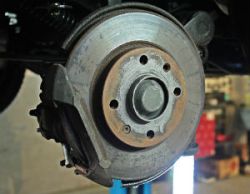
Preventative maintenance is key when it comes to your brakes. You should not ride your brakes if possible. This means keeping your foot off the brake unless you are needing to stop. You should also only slam on your brakes if it is an emergency. As for the parking brake, it is only supposed to be used for... you guessed it… parking.
These tips alone can help with preventing wear and tear of your brakes. You should also routinely have your brake fluid checked and replaced ...[more]
So You Get A Flat Tire...What Now?
Nobody ever looks forward to a flat tire, and nobody ever says "well, that was a really good time" after having one. You can at least minimize the damage to your tire and danger to yourself, though.
Flats vs Blowouts
If you get a blowout, you'll know about it right away. Sometimes the tire can fail dramatically, with a bang as loud as a shotgun going off. Other times, it might just be a loss of air and a sudden change in your car's handling, followed by vibration, noise and a pull to one side. If it's a front tire that fails, your car might be a real handful to drive until you can get to a stop.
In either case, your first job is to pull off the road as quickly (but safely!) as you can. Don't jam on the brakes or make any sudden moves, just get over to the shoulder and the flattest, hardest surface you can find.
Turn on the emergency flashers and set the parking brake. Locate the jack and tire wrench, remove t ...[more]
Self-Inflating Tires…Soon To Be A Reality?
Driving around on underinflated tires is just a bad idea all the way around. Underinflated tires increase a car’s rolling resistance, meaning a drop in fuel efficiency since it takes more energy to move the vehicle down the road.
A single tire that’s down by ten pounds of air means a 3.3 percent drop in fuel economy…multiply that by all four tires, and you can figure on giving up ten percent of your gas mileage. The added friction and rolling resistance also means more heat is generated, and heat is the enemy of the internal structure of a tire. That heat will damage a tire to the point of failure. Studies show that underinflated tires are a full 25 percent more likely to fail, and at least half of one-car accidents involve a tire problem as a factor. And still, it’s estimated that 60 to 80 percent of the vehicles on the road are rolling on tires that are low on air.
The tire pressure monitoring systems on newer cars are ...[more]
Winter Tires? Or All-Season Tires?
Archives
Tags
