
Self-Inflating Tires…Soon To Be A Reality?
Driving around on underinflated tires is just a bad idea all the way around. Underinflated tires increase a car’s rolling resistance, meaning a drop in fuel efficiency since it takes more energy to move the vehicle down the road.
A single tire that’s down by ten pounds of air means a 3.3 percent drop in fuel economy…multiply that by all four tires, and you can figure on giving up ten percent of your gas mileage. The added friction and rolling resistance also means more heat is generated, and heat is the enemy of the internal structure of a tire. That heat will damage a tire to the point of failure. Studies show that underinflated tires are a full 25 percent more likely to fail, and at least half of one-car accidents involve a tire problem as a factor. And still, it’s estimated that 60 to 80 percent of the vehicles on the road are rolling on tires that are low on air.
The tire pressure monitoring systems on newer cars are ...[more]
Mixing Tires – Bad Idea
In a perfect world, all four tires would wear out at the same time. In the same perfect world, everyone would be able to afford a whole set of tires all at once. Unfortunately, things often just do not work out that way.

Sometimes you may just have to replace tires as you can afford them, one or two at a time, but there are some important things to bear in mind if you have to do that.
If you can only afford to replace one or two tires, it’s essential that you go with tires that are identical (or at least as close as possible) to the car’s remaining tires. That means that internal construction, size, tread pattern and design s ...[more]
Get The Most Out Of That Set Of Tires
Winter Tires – Yea or Nay?
The Holidays Are Coming – Is Your Vehicle Ready?
Winter Tires? Or All-Season Tires?
Don’t Forget Your Spare
What Makes All-Season Tires So Great?
So your closet has a pair of flip-flops for the summer, a pair of heavy boots for the winter, and a comfortable pair of sneakers for most of the rest of the year. If you live in a climate that doesn’t have harsh winters, you might just be able to wear those sneakers year-round...and all-season tires are the equivalent of your comfortable sneakers.

So what makes all-season tires so special?
Winter tires are excellent for severe conditions like heavy snow and even ice. They feature specially-designed tread patterns and “sipes”, hundreds of tiny slits which offer biting edges for traction in snow. This means shorter stopping distances, better handling and better control ...[more]
Lipsticks And Dipsticks

Would you like us to share our presentation at your event?
Would you like us to do a private seminar for you or somone you know?
Contact Elizabeth Williams for more details.
UPCOMING CLINICS
May 15, 2014 29707 W Hawthorne- Milstead-a-Go-Go from 5:30 pm to 7pm
September 11, 2014 29707 W Hawthorne
Stay tuned for more details and information!
Tire Tips to Prepare for Fall
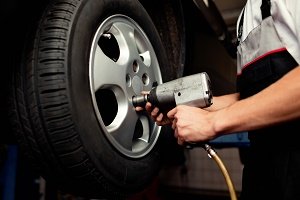 As the first leaves of fall drop in Spring, TX, Milstead Automotive is eager to assist customers in preparing their tires for seasonal travel. Through comprehensive tire repair and installation, Milstead Automotive is prepared with the highest quality products and machinery to quickly service tires for fall. Shop Milstead Automotive’s complete selection of brand name tires including: BFGoodrich, Bridgestone, Firestone, Goodyear and Michelin Tires. Trust Milstead Automotive tire specialist for all tire services this season for improved vehicle safety and motility.
As leaves accumulate on roadways they can provide dangerous or slippery conditions for drivers as tires can easily lose traction. Driving on wet leaves is similar to driving on ice as surface structure is not stable and can quickly cause an accident. ...[more]
| << Previous | 1234 | Next >> |
Archives
Tags
